MageGate Games Review: The 5e GM Toolbox You Didn't Know You Needed
Seriously, You're Going to Want to Get This...

Dear Readers,
There is no shortage of third-party content for Dungeons & Dragons. That is both a blessing and a problem.
The modern 5e ecosystem is overflowing with adventures, subclasses, monsters, magic items, encounter books, campaign settings, random tables, supplements, generators, and “100 Things You Can Find in a Dungeon” products. Some are brilliant. Some are forgettable. Some are essentially 80 pages of material that you will never actually use at the table.
That makes finding genuinely useful Game Master tools surprisingly difficult.
Enter MageGate Games.
Founded in 2021, MageGate Games has carved out a niche producing 5e-compatible resources specifically aimed at Game Masters. The company's catalog currently includes dozens of titles covering boss fights, magic items, monsters, traps, rituals, weather, terrain, and encounter design. MageGate describes its philosophy as creating tools that help GMs “spend less time prepping” while running more memorable sessions.
After looking through the company's current catalog, there is one thing that immediately stands out: MageGate isn't primarily trying to give you another campaign setting. It's trying to make the campaigns you're already running better.
And that distinction matters.
A Different Kind of Third-Party Publisher
The first thing I noticed about MageGate is how focused the catalog is.
Rather than attempting to compete with Wizards of the Coast by publishing enormous campaign worlds, MageGate concentrates on specific problems Game Masters encounter.
Need a better boss battle?
There's a product for that.
Need hundreds of magic items?
There's a product for that.
Want monsters that feel less predictable?
There's a product for that.
Need traps and defenses?
Yep.
Want weather and terrain to actually matter during combat?
They have that too.
This creates an interesting philosophy behind the catalog. MageGate's products aren't necessarily things you read from cover to cover before running a campaign. They are reference tools.
Think of them as ammunition for your GM toolbox.
That makes them particularly appealing to experienced GMs. A new DM may want a complete adventure that tells them exactly what happens next. An experienced DM often wants something different: inspiration, options, modular mechanics, and material that can be dropped into an existing campaign.
MageGate seems designed primarily for that second audience.
Legendary Lairs: Making Boss Fights Matter
If I had to identify the product line that best represents MageGate's philosophy, it would be Legendary Lairs.
The premise is simple: boss fights should feel like boss fights. That sounds obvious, but anyone who has run D&D for a while knows how easily a climactic encounter can turn into “everyone stands in a circle and attacks the monster until somebody falls over.” The Legendary Lairs series attempts to solve that problem through modular encounter design.
The currently available Legendary Lairs: Elemental Lairs provides 132 pages of material built around eight themes: air, cold, earth, fire, lightning, radiant, thunder, and water. The product combines boss lairs with tactical encounters, hazards, traps, and multi-stage battles.
That last part is important.
A good boss encounter isn't merely a creature with a large number of hit points.
The environment should matter.
The terrain should matter.
The players should have meaningful decisions to make.
The battlefield should change.
And the boss should feel like it belongs in the environment.
That is where the Legendary Lairs concept becomes particularly useful.
MageGate's second major release, Legendary Lairs: Unearthly Lairs, takes the same approach into darker territory, covering acid, disease, necrotic, poison, psychic, and shadow themes across 156 pages. For GMs running horror, dark fantasy, planar adventures, undead campaigns, or anything involving aberrations and corruption, that collection has obvious potential.
And MageGate isn't stopping there. The company's planned Legendary Lairs releases include Monster Lairs and Stronghold Lairs, expanding the concept into dragons, giants, undead, humanoids, fey and hags, fortresses, cities, sanctuaries, nautical environments, and more.
That's a smart product strategy.
Instead of creating one enormous book containing every possible boss encounter, MageGate is building a modular ecosystem.
The Magic Item Library
The other major strength of the MageGate catalog is its collection of magic-item books.
The 250 Best Magic Items series is divided according to character archetypes and campaign needs. There are dedicated collections for Barbarians, Druids, and Rangers; Fighters and Rogues; Bards, Sorcerers, Warlocks, and Wizards; and Clerics, Monks, and Paladins. There are also collections devoted to curios, oddities, and trinkets, as well as harvested, ritual, and team-based magic items.
This is one of those areas where third-party publishers can provide enormous value.
The official D&D rules already contain plenty of magic items, but eventually every GM runs into the same problem: You want something different.
Maybe the wizard has received the same collection of standard magical weapons and wants something weird.
Maybe you need a reward for a character that isn't simply “here's another +1 weapon.”
Maybe you're designing a villain whose magic item tells the players something about their personality.
Or perhaps you want treasure to feel like part of the story rather than a random pile of bonuses.
That's where a large library of thematic magic items becomes useful. MageGate's own marketing emphasizes the idea that some of these items can function as plot hooks rather than simply loot. That is exactly how I prefer to think about magic items.
The best magic item isn't necessarily the one with the most impressive mechanical bonus.
It's the one that makes the player say: “Wait…what does this thing do?”
Curios, Oddities, and Trinkets
Of the magic-item books, the 250 Best Magic Items: Curios, Oddities, and Trinkets collection particularly caught my attention.
The book focuses on low- to mid-level characters and includes items that don't necessarily require attunement, along with trinkets that have actual in-game effects and backstory potential.
That's valuable because not every reward needs to be mechanically powerful.
Sometimes the best treasure is the strange thing. A talking coin. A compass that points toward the thing you regret most. A bottle containing yesterday's rain. A key that opens a door that hasn't been built yet. Those sorts of objects can create stories.
And that is one of the recurring strengths of MageGate's catalog: the products appear designed to give the GM ingredients rather than finished meals.
You still have to cook.
But somebody else has done a lot of the shopping.
The Game Master's Guides
MageGate also offers a collection of books specifically aimed at GM technique.
The Game Master's Guide to Rites and Rituals is particularly interesting for campaigns that emphasize religion, prophecy, cults, magical traditions, festivals, exorcisms, omens, and other forms of supernatural worldbuilding. It is an 84-page resource and has earned a Silver Bestseller designation on DriveThruRPG according to MageGate's site.
For a fantasy campaign, rituals are an underused storytelling tool. A ritual doesn't have to be “cast spell, something happens.”
It can be a community event.
It can be a dangerous ceremony.
It can be the climax of an adventure.
It can be something the players interrupt.
It can be something they must protect.
Or it can be something they desperately need to perform while an army of monsters is trying to kill them.
For GMs who enjoy worldbuilding, this is exactly the sort of resource that can turn abstract lore into playable material.
Then there's Game Master's Guide to Traits and Actions for Monsters and NPCs, a massive 276-page PDF focused on customizing creatures and NPCs with modular options, professions, tactics, and additional abilities.
This is probably one of the most useful books in the catalog for an experienced GM.
Why?
Because experienced GMs eventually stop wanting more monsters. They want different versions of the monsters they already have.
The ability to take a familiar creature and change its behavior, tactics, abilities, or role can dramatically increase the useful lifespan of the official monster books.
A goblin doesn't have to be just a goblin. It can be a scout. An alchemist. A fanatic. A trap specialist. A bodyguard. A mounted raider. A disgraced former soldier.
That kind of modular thinking can make encounters feel less repetitive without requiring the GM to learn an entirely new creature every time.
Traps and Terror
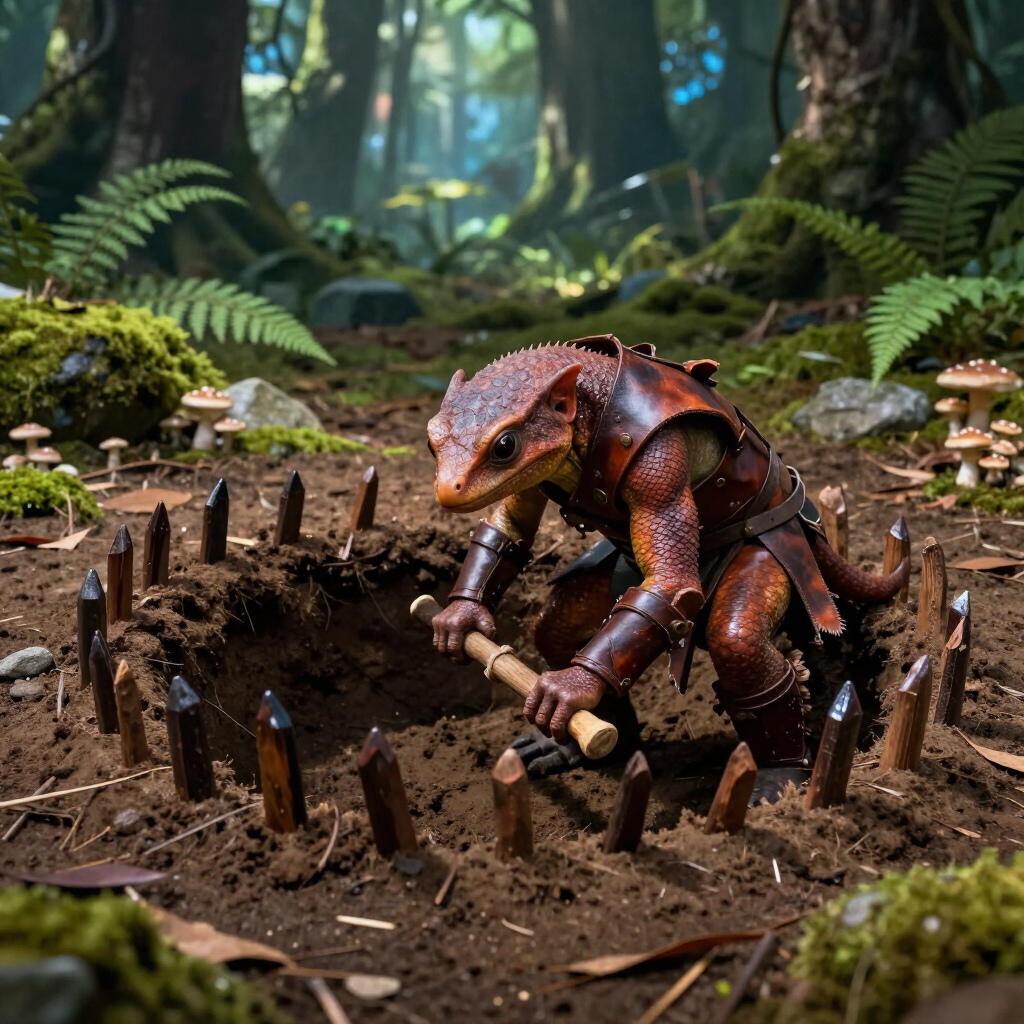
MageGate's Game Master's Guide to Traps and Terrors takes a similar modular approach.
The book contains 80 magical and mechanical traps and lair defenses, along with 115 effects that can be used to customize them. Again, the important word is customize.
The best trap isn't necessarily a complicated puzzle that takes thirty minutes to explain. Sometimes the best trap is something incredibly simple that creates an interesting choice.
Do you cross the room and risk triggering it?
Do you search for another way around?
Do you sacrifice resources?
Do you send the rogue?
Do you trigger the trap intentionally because doing so might be the only way to reach the next room?
A trap should create decisions.
A good trap book should therefore provide more than a collection of “roll Dexterity or take damage” mechanics. MageGate's emphasis on modular effects is promising because it gives GMs the ability to alter traps to fit the adventure rather than forcing every dungeon to feel like the same collection of mechanisms.
Weather and Terrain
Another product family worth mentioning is Extreme Encounters: Weather and Terrain.
MageGate offers Elemental and Unearthly omnibus editions, each collecting previous weather and terrain releases. The Elemental Omnibus covers air, cold, earth, fire, and water, while the Unearthly Omnibus focuses on stranger threats such as acid, necrotic, poison, radiant, and spirit effects.
This may sound less exciting than boss fights or magic items.
Don't underestimate it.
Terrain is one of the easiest ways to improve D&D combat. A fight in an empty 40-by-30-foot rectangle is functional. A fight on a collapsing bridge above a lava river is memorable. A battle during a magical blizzard is different from a battle during a thunderstorm. A fight in an area contaminated by necrotic energy should force different decisions than a fight in a sunny meadow. Terrain gives players things to interact with.
It creates movement.
It creates tactical choices.
And, most importantly, it gives the GM tools for breaking up repetitive combat.
The Heirloom Magic Item System
MageGate also offers something particularly interesting for campaigns that want magic items to grow alongside characters: Heirloom Magic Items.
The 2026 revision is offered as a free resource and is designed to work with both 2014 and 2024 rules. Its central idea is allowing characters to begin with special magic items that scale as the character advances.
This is a fantastic concept.
One of the biggest problems with traditional magic-item progression is that players frequently replace their favorite items.
A sword might be deeply connected to a character's story, but eventually the +1 sword gets replaced by the +2 sword. Then the +2 sword gets replaced by something even better. Mechanically, that makes sense. Narratively, it can be disappointing.
An heirloom item solves that problem by allowing the item itself to grow. Suddenly, the sword isn't merely treasure.[It is part of the character.
That creates opportunities for storytelling, customization, and emotional investment.
And because MageGate currently offers the rules as a free download, it is arguably the easiest entry point into the company's catalog.
Who Should Buy MageGate Products?
I think MageGate's products are best suited for four types of D&D players.
First: experienced GMs.
If you've been running D&D for years, you probably don't need another explanation of how initiative works.
You need tools that solve specific problems.
MageGate excels in that area.
Second: professional GMs.
If you're running multiple campaigns, preparation time matters.
A resource that gives you reusable encounters, monsters, terrain effects, traps, and magic items can potentially save hours of preparation.
MageGate's entire philosophy is built around reducing prep and creating reusable material.
Third: homebrew campaign builders.
If you're constructing your own setting, books like Rites and Rituals, the magic-item collections, and the various encounter tools can give you building blocks without dictating what your world has to look like.
Fourth: GMs who are bored with standard encounters.
This may actually be the biggest audience.
If your players have reached the point where every battle feels like “roll initiative and attack until someone dies,” MageGate's emphasis on environmental effects, modular bosses, traps, and tactical encounters is worth investigating.
The Biggest Strength—and the Biggest Weakness
MageGate's greatest strength is also its greatest potential weakness: it gives you tools rather than adventures.
That's wonderful if you're an experienced GM who enjoys assembling encounters. It's less useful if you're looking for a complete adventure that tells you exactly what happens from beginning to end. MageGate expects the GM to do something with the material.
That means these aren't necessarily “sit down and run it tonight” books in the same way a polished adventure module can be.
Instead, they are more like a workshop.
You take the components. You combine them. You modify them. You build something.
For some GMs, that's exactly what they want.
For others, it may feel like additional work.
Know which kind of GM you are before buying.
Final Verdict
MageGate Games is an interesting third-party publisher because its catalog isn't trying to replace D&D: it's trying to enhance it.
The company's strongest products focus on the areas where experienced GMs often want more depth: boss encounters, environmental hazards, monster customization, magic items, rituals, traps, and terrain.
The Legendary Lairs line is particularly compelling for GMs who want cinematic boss battles.
The 250 Best Magic Items collections are excellent candidates for anyone whose treasure tables have become predictable.
The Game Master's Guides offer broader tools for customizing campaigns and encounters.
And the free Heirloom Magic Items system is an easy way to see whether MageGate's design philosophy works for your table before spending anything.
The current MageGate catalog also offers bundles that can make more sense than purchasing individual titles. For example, the Legendary Lairs Core Collection currently combines four books—two Legendary Lairs titles and two Extreme Encounters omnibuses—for $79.99, with the site advertising savings compared with buying them separately.
Likewise, the Game Master's Guide Complete Collection combines three titles totaling 484 pages and is currently listed at $69.98.
Overall, I'd describe MageGate Games as a GM's utility publisher.
It isn't necessarily the first place I'd send someone who has never run D&D before, but if you've been behind the screen for a while and you're looking for ways to make your encounters more dynamic, your bosses more memorable, your treasure more interesting, and your preparation more efficient, MageGate deserves a serious look.
The company reports more than 105 verified customer reviews averaging 4.9 out of 5 stars, and several of its titles carry DriveThruRPG bestseller designations. Those are encouraging signals, although—as always with third-party RPG products—your mileage will depend on your particular GMing style.
The best third-party supplements don't make the GM unnecessary.
They make the GM better.
And that is where MageGate Games appears to understand the assignment.
My recommendation: If you're curious, start with the free Heirloom Magic Items resource. If you like the design philosophy, look at the Legendary Lairs line next. For GMs who regularly create their own encounters, that is probably where MageGate's catalog offers the biggest potential payoff.
You can explore the full catalog at MageGate Games, at https://www.magegate.com/
Disclosure: This article contains an affiliate link.
We earn a commission if you click this link and buy something, at no extra cost to you.