D&D Kobolds: How to Run Clever, Dangerous, and Memorable Kobold Encounters
Kobolds Aren't Just Throwaway Critters...
Dear Readers,
There are few creatures in Dungeons & Dragons that players underestimate more than kobolds.
They're small. They're usually weak. They often carry crude weapons, wear mismatched armor, and live in tunnels beneath the ground. For many adventuring parties, encountering a handful of kobolds is barely worth mentioning.
And that's exactly why kobolds can be so much fun.
A kobold doesn't need to be stronger than an adventurer. A kobold needs to be smarter about the battlefield.
When you run kobolds as ordinary melee monsters, they're forgettable. When you run them as intelligent defenders who know their territory, prepare traps, coordinate attacks, retreat when necessary, and exploit the weaknesses of larger enemies, they can become some of the most memorable creatures in your D&D campaign.
For Dungeon Masters, kobolds provide an opportunity to teach players one of the most important lessons in D&D: Not every enemy fights fair.
Sometimes the enemy knows the terrain.
Sometimes the enemy has prepared.
And sometimes the enemy has been watching the adventurers for days.
Let's take a closer look at how to use kobolds in D&D.
What Are Kobolds in D&D?
Kobolds are small humanoid creatures traditionally associated with underground environments, mining, dragons, traps, and survival.
Their exact appearance and cultural details have changed across editions of Dungeons & Dragons, but their basic identity has remained remarkably recognizable.
Kobolds are small creatures living in a world populated by things much larger and more powerful than themselves.
That fact should influence how you run them.
A kobold understands that it probably cannot defeat a heavily armored fighter in a straight fight. It understands that the wizard can unleash devastating magic. It knows that the barbarian can hit much harder than it can. So why would a kobold fight them on equal terms?
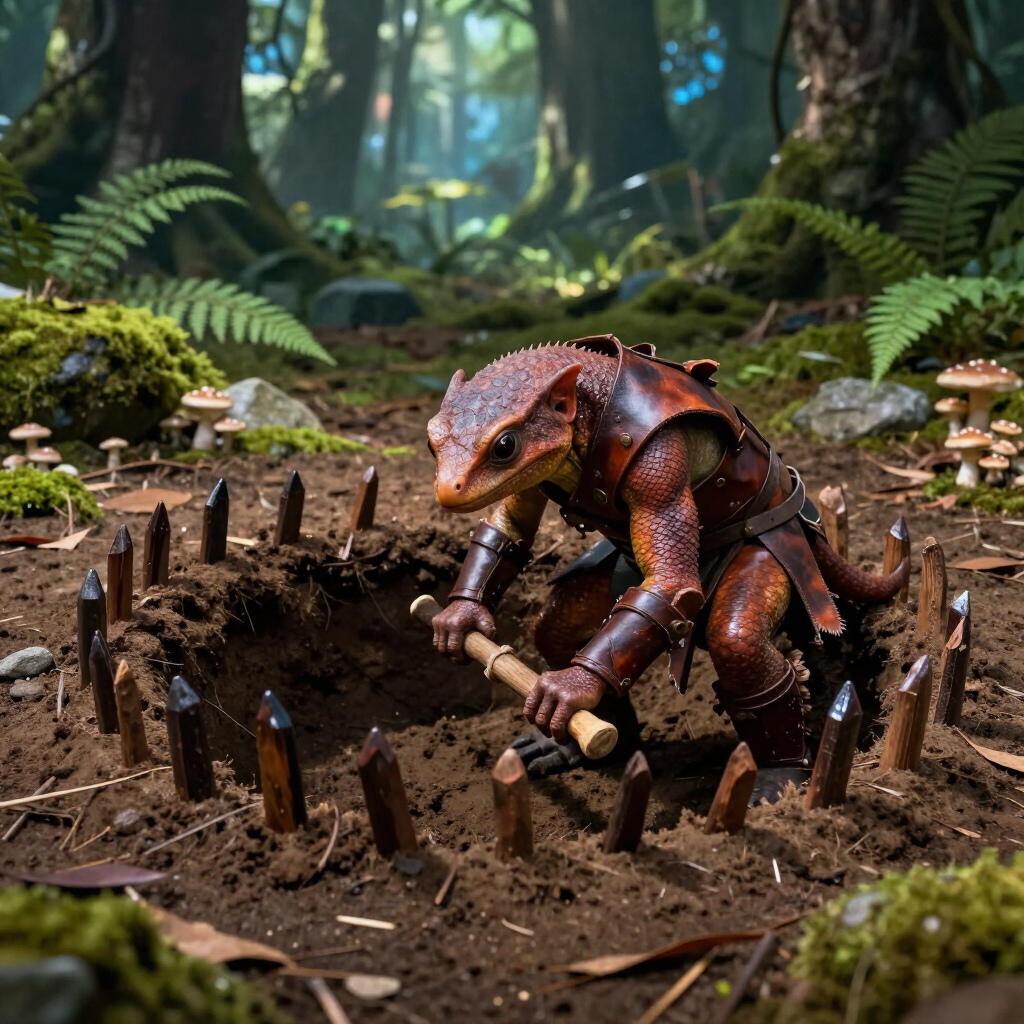
It wouldn't. Instead, the kobold might attack from a hidden position. It might lure the fighter into a pit. It might collapse a tunnel. It might attack the wizard from three different directions.
It might retreat into a tunnel too small for the fighter's armor.
And if the party pursues?
The kobolds already know what's waiting around the corner.
That is what makes kobolds such effective D&D monsters.
Why Kobolds Make Great D&D Enemies
One of the biggest mistakes Dungeon Masters make when running kobolds is treating them as disposable monsters.
The DM puts six kobolds in a room. The kobolds attack. The fighter hits one. The wizard casts a spell. The rogue kills another. The remaining kobolds die. Encounter over.
There's nothing wrong with this if you simply need a quick combat encounter.
But kobolds have much more potential.
The real strength of kobolds isn't their statistics.
It's their environment, intelligence, numbers, and preparation.
Kobolds know their homes. They know where the tunnels go. They know which passages are safe. They know which doors are trapped. They know where enemies can and cannot stand.
They know how long it takes to reach their escape routes.
The adventurers don't.
That creates an enormous advantage.
When designing a kobold encounter, ask yourself: What does the kobold know that the adventurers don't?
That single question can transform the encounter.
How to Run Kobolds in D&D
If you want your kobolds to feel dangerous, don't make them stronger. Make them organized.
Kobolds should communicate with each other. They should have scouts. They should have guards. They should know where the party is. They should understand when they're losing.
And they should have somewhere to retreat.
Imagine that the characters encounter six kobolds in a corridor.
The kobolds attack for one round. Then they retreat. The adventurers follow. Another group of kobolds attacks. They retreat too. The players continue pursuing them. Eventually, the characters realize something is wrong. The kobolds aren't running randomly.
They're leading the adventurers somewhere.
Perhaps the characters have been herded into a chamber. Perhaps the exits are about to close. Perhaps the ceiling is rigged to collapse. Perhaps the kobolds have brought reinforcements.
Suddenly, the players understand. The kobolds weren't losing.
They were setting the battlefield.
That is how you make a low-level monster terrifying without changing its statistics.
Kobold Tactics
Kobold tactics should revolve around one basic principle: Never fight the enemy where the enemy is strongest.
A kobold tribe that knows it's weaker than the adventurers will look for advantages.
Here are several kobold tactics you can use in your next D&D game.
Attack From Cover
Kobolds should use walls, rocks, tunnels, barricades, murder holes, and other forms of cover.
They don't need to stand in the middle of a room and wait to be attacked.
Have kobolds fire ranged weapons from behind barricades.
Then have them retreat through hidden passages.
Focus on One Character
Kobolds can recognize vulnerabilities.
If the wizard is causing the most damage, several kobolds might target the wizard. If the rogue keeps getting behind them, they may protect their rear. If the fighter is nearly impossible to hit, they might simply avoid fighting them.
This makes kobolds feel intelligent.
Use Narrow Passages
Small creatures have an enormous advantage in appropriately sized tunnels.
A kobold might be able to move freely through a passage that forces a larger character to crawl. This can create situations where the party has to decide whether pursuing the kobolds is worth the risk.
Retreat
This is one of the most important kobold tactics. Kobolds should not necessarily fight to the death.
If the battle is going badly, they run.
But retreat doesn't mean the encounter is over.
The fleeing kobolds might:
- Warn their tribe.
- Trigger another trap.
- Retrieve reinforcements.
- Seal a door.
- Collapse a tunnel.
- Lead the party into an ambush.
- Call for help.
- Escape with valuable information
A kobold that survives can become a recurring antagonist.
Kobold Traps: The Heart of a Kobold Dungeon
When people think about kobolds, they often think about traps. This is one of the best opportunities to make kobold encounters unique. But there's an important distinction between a good trap and a bad trap. A bad trap exists only to punish the players. A good trap creates a decision.
Instead of simply dealing damage, consider traps that alter the battlefield. A pit trap could drop a character into a cage. A collapsing ceiling could block the party's escape. A tripwire could trigger an alarm. A false treasure chest could lure characters away from their allies. A door could lock behind the party. A tunnel could redirect the adventurers toward another area of the dungeon.
The best kobold traps should make players think:
"Oh no. What are they trying to make us do?"
That's much more interesting than simply rolling a saving throw.
Build Kobold Traps in Layers
One of the easiest ways to create a memorable kobold dungeon is to design traps in layers.
The first trap alerts the kobolds.
The second trap slows the adventurers.
The third separates the party.
The fourth allows the kobolds to attack.
The fifth provides an escape route.
For example:
The adventurers enter a mine. A hidden tripwire activates a bell. The kobolds hear it. They retreat. The players follow. A section of floor collapses, separating the wizard from the rest of the party. The kobolds attack the isolated wizard. When the other characters arrive, the kobolds retreat again. The players pursue. Then the entire passage begins collapsing.
The encounter has now become an adventure rather than a simple combat.
Designing a Kobold Warren
If you're using kobolds as recurring enemies, give them a home.
A kobold warren should feel like a real settlement.
Consider including:
- Sleeping chambers.
- Kitchens.
- Nurseries.
- Mining tunnels.
- Workshops.
- Guard posts.
- Storage rooms.
- Shrines.
- Meeting chambers.
- Refuse pits.
- Escape tunnels.
- Secret entrances.
- Defensive positions.
The warren should also reflect the kobolds' size.
Some passages should be uncomfortable or impossible for larger creatures. Others might be designed specifically for intruders. You can even make the dungeon itself part of the kobold defense system. Doors might be unusually small. Ceilings might be low. Tunnels might twist constantly. Stairs might be designed for small feet. Hidden crawlspaces might connect different sections.
The kobolds don't merely live in the dungeon.
They designed it around themselves.
Kobold Society
Another way to make kobolds memorable is to give them a society.
Don't make every kobold interchangeable. Different kobolds should have different jobs.
A kobold tribe might contain:
Scouts who explore the surrounding region.
Miners who extract valuable resources.
Trapmakers who maintain the warren's defenses.
Guards who protect important locations.
Artisans who create weapons and tools.
Priests who maintain religious traditions.
Dragonkeepers who preserve ancient stories.
Elders who remember past dangers.
Leaders who coordinate the tribe.
Suddenly, killing a kobold becomes more complicated.
What happens if the characters kill the tribe's best trapmaker? Who replaces them? What happens if they kill the leader? Does another kobold take command? Does the tribe splinter?
Does a more aggressive leader take control?
Those consequences can turn a simple dungeon into a living environment.
Kobold Names Matter
If you want players to remember your kobolds, give important ones names.
"Kobold #4" is forgettable. Skritch is memorable.
"Twelve kobolds" are enemies. Skritch's tribe is a faction.
Names immediately give monsters individuality.
For kobold NPCs, consider names such as:
- Skritch
- Klik
- Vek
- Snik
- Grib
- Tikka
- Razzik
- Zik
- Nib
- Kree
- Vrix
- Soot
- Brakka
- Yip
- Tekk
Give important kobolds personalities too.
One might be nervous. Another might be arrogant. One might be intensely religious. Another might be obsessed with engineering. One might hate adventurers. Another might secretly admire them.
The possibilities are endless.
Kobolds and Dragons
Kobolds and dragons have a long association in D&D.
For many campaigns, dragons represent the ultimate source of kobold identity, religion, or political power. But don't assume every kobold tribe needs to worship dragons. Consider different possibilities.
Some kobolds might worship a dragon. Some might serve one. Some might fear one.
Some might believe dragons are their ancestors. Some might consider dragons divine. And some might absolutely hate dragons.
That last possibility can create an especially interesting story. Imagine a kobold tribe whose ancestors were enslaved by a dragon. For generations, the tribe has lived in fear of dragons. Now the dragon has returned. The kobolds aren't trying to summon it. They're trying to stop it. The adventurers arrive expecting to fight dragon-worshiping monsters. Instead, the kobolds desperately need their help.
Suddenly, the "kobold dungeon" has become something much bigger.
The Kobold Inventor
Kobolds are also perfect for creating unusual D&D equipment.
Because they don't necessarily have access to sophisticated resources, kobold inventors may rely on scavenged materials.
A kobold workshop could contain:
- Homemade crossbows.
- Mechanical alarms.
- Rope elevators.
- Mining equipment.
- Crude explosives.
- Smoke-producing devices.
- Improvised shields.
- Spring-loaded traps.
- Scrap-metal armor.
- Experimental weapons.
- Tiny vehicles.
- Homemade gliders.
And remember: Not everything needs to work.
In fact, failure can be hilarious.
A kobold throws a strange device. Nothing happens. The players laugh. The kobold looks confused.
Then the device starts smoking.
The kobold screams: "RUN!"
Now everyone runs.
That combination of humor and danger can make kobolds incredibly entertaining.
Kobolds Don't Have to Be Evil
One of the best ways to surprise your players is to make kobolds sympathetic.
Perhaps the characters discover a kobold settlement that is simply trying to survive. Maybe the tribe has been stealing food because its mine collapsed. Maybe adventurers killed half the tribe's population last month. Maybe the kobolds are refugees. Maybe they're protecting their young. Maybe they have been blamed for crimes they didn't commit. Maybe they're actually defending the surrounding villages from something worse.
This can create one of the best kinds of D&D encounter: The encounter where the players aren't sure who the monsters are.
Kobolds as D&D Allies
Kobolds can also become excellent allies.
Imagine the party gets lost underground. They encounter a kobold tribe. At first, the kobolds are hostile. Then something enormous begins moving through the tunnels. The kobolds know the tunnels. The adventurers have the weapons.
Neither group can survive alone.
Now the players have to negotiate. And perhaps the kobolds don't ask for gold.
They ask for something mundane. "Bring us flour."
Why? Because they're starving.
Or: ["Repair our water pump."
Or: "Find our missing scout."
Or: "Promise you won't tell the dragon where we live."
Small requests can make kobolds feel like "real people" rather than fantasy stereotypes.
The Kobold Who Learned the Party's Tactics
Want to create a recurring kobold villain?
Don't make it stronger. Make it smarter.
Imagine a kobold named Tikka. The party encounters Tikka early in the campaign.
She escapes.
The next time they encounter her, she knows the wizard's favorite spell. The third time, she knows which character always charges ahead. The fourth time, she has created a trap specifically designed to exploit the rogue.
Eventually, the players discover something unsettling.
Tikka has been studying them.
The kobolds have records.
They know their weapons.
They know their abilities.
They know their habits.
Maybe the characters find drawings scratched onto a wall. There they are. The entire party.
And next to each character is a list of weaknesses.
That's when kobolds become frightening.
Kobolds as Recurring Villains
A recurring kobold enemy can be especially effective because the players may initially underestimate them. Imagine that the party defeats a kobold tribe. They assume the problem is solved. Then, weeks later, someone begins sabotaging their supplies.
A kobold was watching.
The characters encounter another trap. It's familiar.
They realize who created it. Tikka survived.
Now the kobold has become a personal enemy.
This is a powerful storytelling technique because the villain doesn't have to become physically stronger.
The villain becomes personally relevant.
Kobolds at Higher Levels
Kobolds are often associated with low-level D&D adventures. But you don't have to stop using them once the party reaches higher levels. Instead, increase their resources rather than their individual power.
A kobold kingdom might control a vast underground mining operation. A kobold tribe could possess stolen magical weapons. A kobold faction might have an alliance with a dragon. Kobolds could become spies, scouts, engineers, assassins, diplomats, or military specialists. A kobold king doesn't need to personally defeat a high-level fighter.
The king has an army.
The king has intelligence networks.
The king controls the tunnels.
The king has traps.
The king knows the surrounding region.
And perhaps most importantly: The king knows the adventurers are coming.
Five Kobold Encounter Ideas for D&D
Need a kobold encounter for your next session?
Try one of these.
1. The Empty Mine
The adventurers discover kobold tracks throughout an abandoned mine. But there aren't any kobolds. The tribe is hiding. They're watching the party from secret tunnels. The players aren't hunting kobolds.
The kobolds are hunting them.
2. The False Dragon
The kobolds claim their dragon has awakened. The players prepare for an epic battle. Instead, they discover a massive mechanical dragon built from scrap metal. It doesn't have to be powerful.
It just has to look terrifying.
3. The Hostage Exchange
The adventurers capture a kobold. Later, an NPC disappears. The kobolds propose an exchange.
Neither side trusts the other.
The negotiation becomes an encounter all its own.
4. The Kobold Siege
The party takes shelter inside an abandoned fortress. During the night, dozens of kobolds surround it. But they don't attack. They build.
By morning, the fortress is surrounded by trenches, barricades, ladders, tunnels, and siege equipment. The kobolds aren't trying to defeat the party.
They're trying to make the party surrender.
5. The Last Kobold
The party clears a dungeon. They believe the kobolds are defeated. Then they hear a voice. One kobold remains.
He doesn't attack.
He asks:"Why di d you kill my family?"
Now the party has to confront the consequences of what they've done.
Kobolds Can Teach Players About D&D
Kobolds aren't just useful because they're fun monsters. They're useful because they teach players how D&D actually works.
A kobold encounter can teach players that:
The environment matters.
Terrain isn't decoration.
Information matters.
Knowing what the enemy knows can change everything.
Movement matters.
Standing still isn't always the best strategy.
Objectives matter.
You don't always need to kill every enemy.
Preparation matters.
Intelligent enemies prepare too.
Morale matters.
Enemies don't necessarily fight until they're dead.
Consequences matter.
The enemies who escape can come back. These lessons apply to every monster in the game.
Kobolds simply make them obvious.
The Secret to Making Kobolds Memorable
Here's the most important advice for running kobolds in D&D: Give them something to care about.
The best kobold encounters aren't memorable because the creatures have interesting statistics. They're memorable because the kobolds have goals: they want food, they want safety, they want revenge, they want freedom, they want to protect their children, they want to serve their dragon, they want to prove themselves, they want to survive.
Once a kobold has something worth fighting for, it stops being a stat block. It becomes a character.
Once an entire tribe has something worth fighting for, the tribe becomes a faction. And once the faction has a history with the player characters, you've created something much more powerful than a random encounter.
You've created part of the campaign.
Never Underestimate a Kobold
D&D is full of monsters capable of defeating adventurers through sheer power: dragons have devastating breath weapons, giants possess incredible strength, demons and devils wield terrifying supernatural abilities, undead creatures can drain life, aberrations can twist minds.
Kobolds have something different.
They have ingenuity. They understand that they're smaller than their enemies. They understand that they're weaker. They understand that they probably can't win a fair fight.
So they don't fight fair.
They dig tunnels. They build traps. They gather information. They retreat. They regroup. They exploit weaknesses. They use the environment. They wait. And they learn.
That's why kobolds remain such a useful creature for Dungeon Masters. At low levels, they can teach players to pay attention. At mid levels, they can become organized factions. At high levels, they can become spies, engineers, allies, political players, or agents of a powerful dragon.
The next time your players laugh when they hear the word "kobold," let them laugh.
Give them six kobolds. Let the characters win. Let one kobold escape. Then start taking notes. What spells did the wizard use? Which character charged ahead? Who opened the treasure chest? Who refused to retreat? Who protected the wounded? The kobolds can learn. The next time the party returns, the traps are different. The tunnels have changed. The guards know their names.
The kobolds have prepared for their favorite spells.
And somewhere in the darkness, a tiny voice whispers: "Welcome back."
That's when your players stop laughing. That's when they realize something important. They didn't enter the kobold dungeon.
The kobolds invited them in.
And they've been waiting.
Final Thoughts for Dungeon Masters
Kobolds may be one of the smallest monsters in D&D, but they offer some of the biggest opportunities for creative encounter design. They encourage Dungeon Masters to think beyond hit points and attack bonuses. They encourage you to think about terrain, preparation, intelligence, morale, faction politics, traps, objectives, and consequences. Most importantly, they remind us that a monster doesn't have to be powerful to be dangerous. It just needs an advantage.
For kobolds, that advantage is usually their home. Give them tunnels. Give them traps. Give them a reason to fight. Give them leaders with personalities. Give them memories. And, most importantly, let them learn.
Because the moment your players realize that the kobolds remember what happened last time, you've transformed a disposable monster into a recurring part of your campaign. And that's when kobolds get really interesting.
Never underestimate the kobold with a shovel.
He probably dug the pit you're standing in.
Until next time, Dear Readers...