The Dungeon Master’s Lie Budget: What You’re Allowed to Fake (and What You Shouldn’t)
That Depends on the definition of "lying"

Dear Readers,
Okay, fair warning: this article is going to discuss something hotly debated in GM circles.
Every DM eventually meets the same weird little demon: the moment you realize the dice are about to do something that will make your table less fun.
Maybe it’s the goblin that crits the level-1 wizard twice in a row. Maybe it’s the dragon that whiffs every attack and turns your “epic showdown” into a slapstick blooper reel. Maybe it’s your own mistake—an encounter you misread, a rule you forgot, a monster you accidentally ran with the wrong bonus—and now the scene is drifting toward a cliff you didn’t mean to build.
That’s when the temptation arrives in a velvet cape: “Just… adjust it. Nobody has to know.”
Let’s name the thing plainly. As Dungeon Masters, we sometimes fake outcomes. We hide numbers. We massage difficulty. We quietly rewrite a fact. We stretch or shrink an encounter like taffy. We do it because we want drama, fairness, genre, pacing, and player enjoyment. And we do it because we’re humans juggling ten spinning plates while narrating a fantasy action movie.
The hard part isn’t whether DMs can lie. The hard part is deciding when that lie is a kindness—and when it’s a betrayal.
That’s where the idea of a “Lie Budget” comes in: a limited, intentional allowance for behind-the-screen manipulation that exists to protect the game, not the DM’s ego. Your budget is not infinite. Every time you spend from it, you’re borrowing against the table’s trust. Spend wisely, and the campaign sings. Spend carelessly, and you’re running a puppet show with dice as props.
Let’s build a philosophy you can actually use: clear lines, practical tools, and alternatives that keep suspense honest without turning you into a courtroom stenographer for random number generators.
What Is a Lie Budget?
A Lie Budget is the amount of invisible control you can exercise before the game stops feeling real to your players.
It’s not a moral condemnation. It’s a resource model.
- You have a budget because tabletop RPGs are not computer simulations. They’re collaborative stories with rules, and the rules are a tool, not a god.
- You have a budget because secrecy is part of the DM’s job. Players don’t see monster hit points, target numbers, or the full map. “Hidden information” is already baked into the role.
- You have a budget because trust is the core currency at the table. If your players believe outcomes are meaningful, they invest emotionally. If they suspect outcomes are prewritten, they disengage.
A healthy Lie Budget is small and used for maintenance: fixing friction, protecting agency, and keeping the tone true. An unhealthy Lie Budget is large and used for control: forcing “your” story, saving “your” villain, punishing “their” cleverness, or ensuring the game hits your planned beats no matter what.
If that sounds abstract, good. It should. Because the ethical line isn’t about whether you changed a number. It’s about why you changed it and what it does to player agency.
The Clean Ethical Line
Here’s the line I recommend drawing in ink:
Allowed: Faking that protects player agency, table safety, or the intended play experience—without invalidating informed player choices.
Not allowed: Faking that overrides player agency, rewrites established truths they relied on, or changes outcomes after players have meaningfully committed.
That’s it. That’s the skeleton key.
“Player agency” means their choices matter because they can reasonably predict the world’s logic, take risks, and live with consequences. Agency is not “players always win.” Agency is “players can make decisions that change what happens.”
So when you fake something, ask:
- Does this keep the world’s logic coherent?
- Does this preserve or enhance the consequences of player choices?
- Would a reasonable player feel cheated if they learned about the change later?
If the answer to #3 is “yes,” you just spent beyond your ethical line.
Now, let’s talk about the most common types of “faking” and where the line tends to get blurry: fudging, hidden math, retroactive continuity, and elastic encounters.
1) Hidden Math: The Most Acceptable “Lie”
Hidden math is when you keep mechanical information behind the screen: monster stats, DCs, exact initiative modifiers, encounter XP math, and the like. This isn’t really lying. It’s normal operation.
But hidden math becomes a lie when it’s used to change the meaning of player choices.
What’s generally allowed
- Keeping DCs secret. Players shouldn’t always know whether they missed by 1 or by 10.
- Varying monster hit points within a reasonable range. The book’s average is a suggestion; individual creatures can be tougher or weaker.
- Tracking “soft thresholds” like morale, exhaustion, or panic without announcing the exact number.
Why this is okay: players still make choices based on fiction and risk, and the mechanics support that fiction. You’re not changing the world after the fact; you’re adjudicating it.
What crosses the line
- Moving the DC after the roll because you want a different outcome.
- Secretly deciding that a spell “doesn’t work” because it would solve the scene too quickly.
- Inflating a monster’s AC mid-fight because the party is hitting too often.
Why this breaks trust: it turns player decisions into theater. They chose a tactic because they understood the world a certain way, and you moved the goalposts once you saw the result.
Honest alternatives
If you want a harder lock or a more resilient monster, telegraph it. Show the lock’s intricate dwarven runes. Describe the monster’s plates of obsidian bone. Let players infer “this will be tough” and choose accordingly.
You can also use layered challenges. The lock opens, but triggers a silent alarm. The monster is wounded, but its death releases a curse. Difficulty can come from consequences, not from secretly rewriting math.
2) Fudging Dice: The Spiciest Currency in the Budget
Fudging is the classic DM sin/confession: changing a die result.
This is where the Lie Budget metaphor shines, because dice fudging is an expensive purchase. Do it too often and the players’ relationship with probability—the heartbeat of the game—starts to feel fake.
When fudging can be defensible
- To correct a DM mistake that would cause unfair harm. Example: you misread a stat block and gave a creature a +11 to hit instead of +7, and you realize mid-fight that you’re accidentally running a meat grinder.
- To prevent a single freak roll from ending the campaign in a way your table doesn’t enjoy.
Example: a random encounter crit-kills the cleric in session one and everyone at the table looks deflated, not thrilled.
- To preserve tone in rare cases. Example: a horror game where you need the monster to land one meaningful hit to establish threat—but the dice refuse, and the scene collapses into comedy.
Notice the pattern: you’re protecting the intended play experience and keeping the players’ choices meaningful. You’re not robbing them of success; you’re preventing a random spike from replacing the story you all agreed to play.
When fudging is not defensible
- To “save” your villain from a clever plan.
- To prevent the party from winning because you wanted a longer fight.
- To punish a player by “accidentally” critting them.
- To remove the cost of a player’s risky choice after they knowingly took that risk.
That last one matters. If the rogue says, “I sprint across the trapped hallway,” and you fudge the trap roll because you don’t want them to get hurt, you just taught the table that consequences are optional. That’s not kindness; it’s erosion.
A practical rule: never fudge against competence
If the players used smart tactics, good resource management, or creative problem solving, let them win. Victory earned is sacred. Your Lie Budget is not a tax on cleverness.
A practical rule: don’t fudge in both directions
If you sometimes change rolls to help the party and sometimes to hurt them, the dice lose meaning entirely. It becomes “whatever the DM wants.” If you must fudge, bias it toward fairness and fun, not toward drama through suffering.
Better alternatives to fudging
- Use “fail forward.” A failed roll changes the situation instead of ending it. The lock opens, but breaks your thieves’ tools. The jump succeeds, but you land prone and noisy.
- Use consequence menus. When a roll fails, offer two costs: “You can succeed, but you take 2d6 damage from the mechanism, or you can fail and stay safe.”
- Use inspiration, hero points, or luck mechanics. Give players visible tools to resist bad variance.
- Use soft landing design. Put stakes on the line that aren’t “campaign ends.” Capture, debt, scars, lost time, alarms, rival advancement—these keep tension without extinction.
3) Retroactive Continuity: The Dangerous Comfort of the Eraser
Retroactive continuity (“retcon”) is changing a past fact: where an NPC was, what an item does, what a clue meant, whether a door was locked, whether the duke already knew the party’s names, and so on.
Retcons are tempting because they feel like fixing continuity. Sometimes they are. Sometimes they’re you sanding down a consequence that makes you uncomfortable.
Allowed retcons (maintenance retcons)
- Correcting a DM error that contradicts established reality. “I said the bridge was wood, but it’s stone—my notes were wrong. It’s stone.”
- Clarifying an ambiguity that never became player knowledge. “I didn’t specify which tunnel was damp; it’s the left one.”
- Adjusting something the players could not have acted on yet. “The letter’s seal is actually from House Varr. I forgot to mention the crest.”
The key is that the retcon doesn’t invalidate player decisions made with available information.
Retcons that cross the line (agency retcons)
- Changing a fact the players used to choose a plan. “Actually, the guards were already posted at the window, so your infiltration fails.”
- Rewriting a clue because the party solved the mystery too fast. “The diary was a fake all along.”
- Undoing a consequence because it’s inconvenient. “The duke didn’t really die; it was an illusion.”
These are not continuity fixes. These are reality edits.
Honest alternatives
If you need to tighten continuity, do it forward, not backward. Instead of “the duke didn’t die,” say “the duke is dead, and the vacuum of power creates a brutal scramble.” If the party solved the mystery quickly, reward them with time: they can set a trap, gather allies, or strike first.
Being clever should create opportunities, not trigger the DM’s panic.
When you truly must retcon something significant, be transparent. A quick out-of-character moment—“I made a mistake about X; to keep things coherent, can we treat it as Y?”—costs far less trust than secret rewriting. You’re not revealing your whole screen; you’re respecting the social contract.
4) Elastic Encounters: Stretching Without Snapping
“Elastic encounters” are fights or challenges that adjust difficulty on the fly: reinforcements appear, a monster’s HP feels suspiciously infinite, the villain suddenly gains a new ability, the terrain changes, the boss “phases,” and so on.
Elasticity is not inherently bad. Video games do it constantly. The ethical issue is whether elasticity responds to player choices or to the DM’s desire for a specific runtime.
Allowed elasticity (responsive world)
- Reinforcements that were already plausible and telegraphed. The goblins have drums; if the party takes too long, more arrive.
- Monsters changing tactics when threatened. The ogre retreats behind cover when bloodied. The mage starts using fog when the archers dominate.
- Dynamic environments with established triggers. The chandelier can fall. The lava rises each round. The ritual clock ticks toward completion.
This kind of elasticity makes the world feel alive and rewards smart play. Players can influence it by acting faster, quieter, or more decisively.
Cross-the-line elasticity (rubber-banding the outcome)
- The boss gains 80 more HP because the party is doing well.
- The villain suddenly has “legendary resistance” because your hold person landed.
- The monster stops being vulnerable to radiant damage because the cleric is shining.
These changes rewrite the terms mid-game. They’re especially painful because they punish players for being effective.
Better elastic design that doesn’t lie
Pre-build elasticity into your encounters in ways players can see or infer.
- Hit point ranges, not fixed totals: decide before the fight that the boss has between 120 and 160 HP. When the moment feels right—usually after players have gotten to do their cool things—let the fight end within that range. You’re not changing reality; you’re choosing an individual within a plausible spread.
- Phases with triggers: “At half HP, the lich shatters the floor and becomes airborne.” Players can learn and plan for it.
- Morale rules: enemies surrender, flee, or bargain when things go south. That makes easy fights end faster without cheating.
- Reinforcement clocks: roll a d6 each round; on a 6, reinforcements arrive. Players can affect the clock by blocking exits or silencing alarms.
- Objective-based combat: the goal isn’t “reduce HP to zero,” it’s “stop the ritual,” “escape the collapsing hall,” or “protect the hostage.” This creates tension even when damage output is high.
Now your “elasticity” is part of the game’s logic, not the DM’s invisible hand.
How to Manage Your Lie Budget in Practice
Philosophy is nice, but you need table-ready procedures. Here are the three tools that keep a Lie Budget healthy.
Tool 1: The Table Contract (Even a Tiny One)
Before a campaign—or before your next arc—set expectations about how “honest” the mechanics will be. This doesn’t need to be a legal document. A few sentences is enough.
Examples:
- “I roll most things openly, but I’ll keep some rolls secret for suspense.”
- “I don’t fudge dice, but I will adjust encounter difficulty between sessions.”
- “I might sometimes adjust a monster’s HP within reason to keep pacing, but I won’t change outcomes to negate your choices.”
- “If I make a major mistake, I’ll pause and correct it rather than secretly patching.”
That last sentence is gold. It tells players you value coherence and fairness more than your pride.
Tool 2: The “Fix My Mistake” Pause
When you realize you’ve made a significant error—wrong rule, wrong stat, wrong assumption—pause. Admit it. Fix it.
It feels scary the first time. Then it feels like freedom.
A quick script:
“Time out. I just realized I ran that wrong. Here’s the correct rule. To keep things fair, we’re going to apply it starting now, and I’ll adjust X to account for the last round.”
This is not “breaking immersion.” This is maintaining the integrity of the shared world.
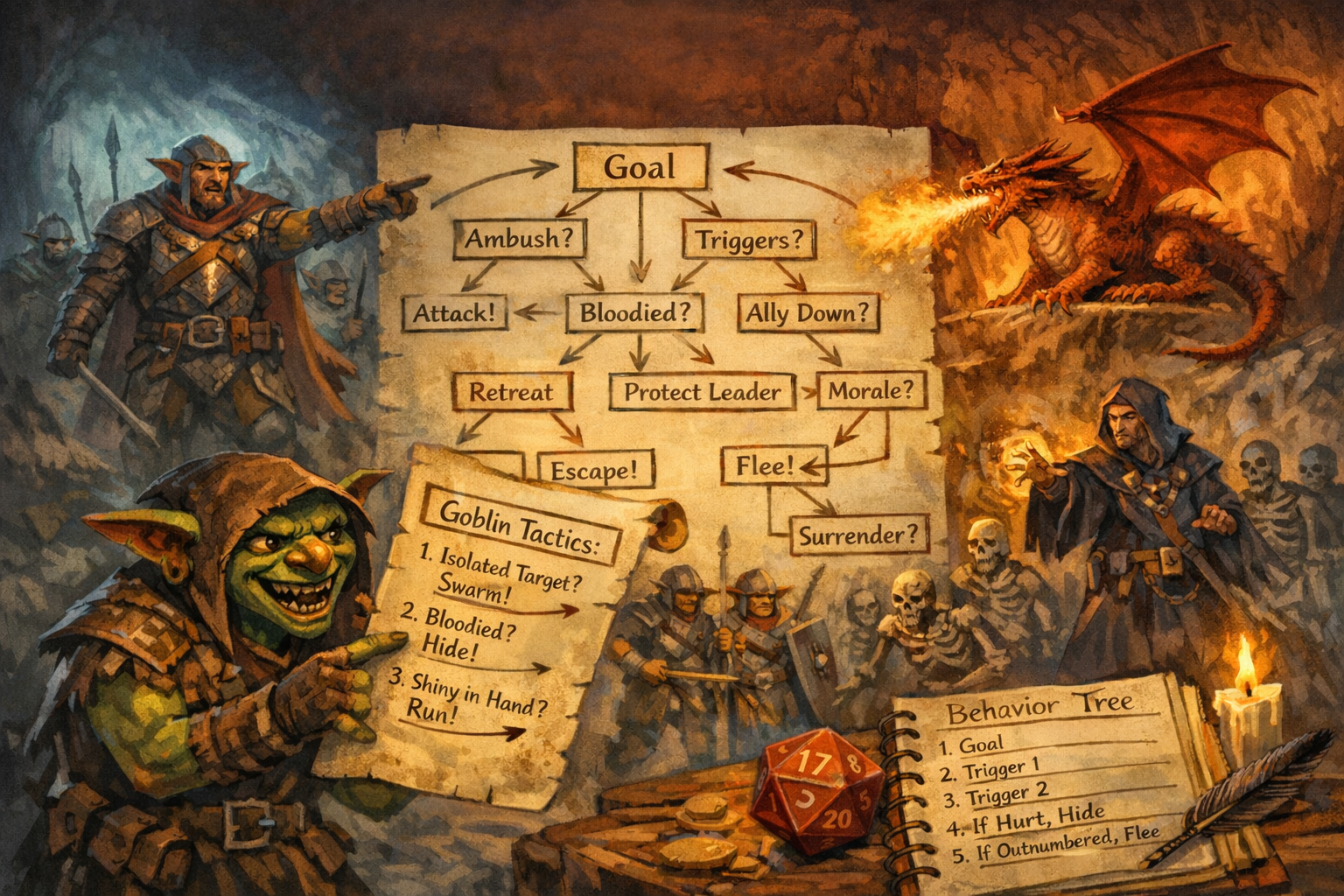
Tool 3: The Fudge Decision Tree
If you feel the urge to spend from your Lie Budget, run this mental check in ten seconds:
- Is this problem caused by my mistake? If yes, fix openly.
- Is this problem caused by a player choice? If yes, let consequences happen.
- Is this problem caused by random variance the table will hate? If yes, consider a gentle intervention.
- Can I solve it with an in-world consequence instead of changing the roll? If yes, do that.
- Would I be comfortable telling the players later? If no, don’t do it.
That fifth question is the honesty compass. If you wouldn’t want them to know, it probably violates agency.
Tool 4: Keep a Tiny Lie Ledger
If you want to get delightfully nerdy, track your spending. Put three checkboxes at the top of your session notes labeled “Fudge,” “Retcon,” and “Elastic.” If you mark one, you owe yourself a post-session reflection: Why did I do it? Did it protect agency? Did it change a decision? If you mark two in a night, treat it as a design signal, not a moral failure: something in prep, pacing, or expectations needs reinforcement. Your goal isn’t zero marks. Your goal is awareness before next session.
Common Scenarios and Clean Solutions
Let’s make this concrete with a few classic moments.
Scenario: The boss is dying too fast
The unethical fix: give the boss more HP mid-fight.
The ethical fixes:
- Let the boss go down, but trigger a consequence you seeded: the death releases a shockwave, the ritual completes partially, the lieutenant takes command.
- Use morale and escape: the boss flees, not because you “saved” them, but because it’s a smart survival choice.
- Add objectives next time. A boss with a ritual clock is threatening even when it’s fragile.
Scenario: The party is about to TPK due to unlucky crits
The unethical fix: quietly turn hits into misses, erase crits, or reduce damage constantly.
The ethical fixes:
- Spend your Lie Budget once, not repeatedly. Convert one critical into a normal hit, or reduce one damage roll, then let the rest stand.
- Offer surrender or capture as an alternate failure state. The fight ends, but the story continues with new stakes.
- Let allies intervene, but at a cost: they demand payment, they create obligations, they complicate the mission.
Scenario: A player’s spell trivializes the villain
The unethical fix: “It doesn’t work because… reasons.”
The ethical fixes:
- Let it work. Celebrate the cleverness. Then ask: what happens next? A villain can be defeated quickly and still cause ripples.
- Use layered villains. The charming duke is not the only antagonist; the cult, the demon contract, the political fallout remain.
- Protect spotlight, not outcomes. If one character repeatedly solves everything, you can design challenges that invite other strengths—without negating the strong character’s wins.
Scenario: You forgot an important clue
The unethical fix: retroactively declare they already found it, secretly changing reality.
The ethical fixes:
- Reintroduce it forward: another NPC mentions it, a newspaper prints it, a rival drops it while fleeing.
- Turn it into a reward: the party gets it when they do something proactive, making discovery feel earned.
- Admit it: “I meant for that clue to be in the study. Let’s treat it as if it was there.”
Transparency beats stealth.
The Lie Budget as a Skill, Not a Habit
Here’s the twist: the best DMs don’t develop better lies. They develop better alternatives.
The more you learn to design flexible encounters, use fail forward, and set expectations, the less you need to touch the dice at all. Your Lie Budget shrinks because your game becomes resilient.
Think of it like DM armor class. A brand-new DM has AC 12 and gets hit by chaos constantly, so they panic-patch. A veteran DM has AC 18 because they’ve built procedures, pacing tools, and a comfort with improvisation. The chaos still swings; it just bounces off more often.
A final note on honesty and magic tricks:
Part of DMing is showmanship. You create the illusion of a vast, living world. You choose which details to spotlight. You pace reveals. That is not deception; that is craft.
The line is crossed when your “magic trick” makes the players’ choices meaningless.
So keep your Lie Budget small. Spend it like emergency rations, not like pocket change. And whenever possible, choose the cooler option: let the dice speak, then make the consequences sing.
Because the real secret behind the screen isn’t how often you can get away with a lie.
It’s how often you can tell the truth in a way that still feels like adventure.
Until next time, Dear Readers...