The Long Goodbye: Crafting Epilogues, Final Sessions, and Legacy One-Shots
Ending Mean the Start of New Beginings
Dear Readers,
I've written on this subject before, but I found that there's more to say on it.
Every campaign ends twice.
First, there’s the story ending: the tyrant falls, the ritual is stopped, the dragon’s last roar fades into the smoke. Dice get rolled, minis get put away, someone cheers, someone else says, “Wait, did we just… win?”
Then there’s the table ending: the last snacks get eaten, people pack up their dice, and someone quietly says, “I’m really going to miss this.”
We’re pretty good at the first one. D&D books are full of climactic battles, exploding fortresses, and world-shaking revelations.
We are, collectively and I would argue objectively, much worse at the second one.
Campaigns fizzle when someone moves away or schedules fall apart. Stories that deserved a tearful curtain call instead get a Discord ping that says, “Sorry, life is wild, can we pause for a bit?” Six months later, everyone quietly knows it’s over, but nobody ever got to say goodbye.
This post is about fixing that.
Welcome to The Long Goodbye: Crafting Epilogues, Final Sessions, and Legacy One-Shots, a toolbox for ending campaigns with intention. We’re going to talk about how to:
- Plan and run final sessions that feel like finales instead of just “another dungeon.”
- Build epilogues that give players closure and spotlight their character arcs.
- Design legacy one-shots that revisit your world months or years later without rebooting the whole campaign.
Dice can make great beginnings. With a little care, they can make great endings too.
Why Endings Matter So Much at the Table
On paper, it’s just a game ending. In practice, it’s so much more.
Campaigns carry:
- Shared memories – “Remember when the barbarian tried to suplex the mind flayer?”
- Inside jokes – “Don’t open mysterious wardrobes, we talked about this.”
- Emotional arcs – characters who forgave, failed, loved, or changed.\
When a campaign ends well:
- Players feel seen. Their choices mattered, their arcs landed, their time was honored.
- The world feels real. It doesn’t vanish; it settles into the “lived-in” corner of your brain.
- The group feels stronger, not weaker. The end of one story becomes the foundation for the next.
When a campaign ends badly—or never really ends at all—there’s a low-level ache. People hesitate to invest as deeply next time because they subconsciously expect the story to just evaporate again.
So crafting good goodbyes isn’t just about the current game. It’s about building trust in the future of your table.
Step One: Calling Your Shot
The first move in crafting a strong ending is deceptively simple:
You say out loud that you’re heading toward the end.
That might sound like:
- “Hey folks, I’m aiming for this arc to wrap up in about 4–6 sessions.”
- “Once you confront the Lich-Queen, we’ll have a finale session and then an epilogue session.”
- “After this dungeon, I’d like to do a time-skip one-shot and then call this campaign complete.”
This does a few powerful things:
- It gives players permission to think about endings. They can start considering what closure looks like for their characters.
- It focuses everyone. When players know the end is on the horizon, they lean in instead of drifting.
- It creates room for epilogues and legacy sessions instead of smashing everything into one overstuffed final night.
If you can, call your shot a few sessions before the finale. “Tonight is the last session” is better than nothing, but “We’re entering the final act” is better still.
Designing the Final Session Like a Season Finale
Your last main session shouldn’t just be “a slightly bigger combat encounter.” Think of it like a TV season finale: it should weave together plot, character, and theme.
Here’s a structure you can steal and customize:
1. The Opening Beat: Calm Before the Storm
Start with something quiet.
This might be:
- A final planning scene in the war tent.
- A campfire on the eve of battle.
- A slow walk through the city they’re about to risk everything for.
Give players space to:
- Reaffirm their goals: “Why are we doing this?”
- Share a last joke or memory.
- Offer each other blessings, promises, or confessions.
Mechanically, this can be short. Emotionally, it’s huge. It sets the tone: This is it.
2. The Road to the Confrontation
Next, make the journey to the final confrontation feel symbolic.
- Revisiting old locations on the way.
- Meeting NPCs from previous arcs, now changed.
- Facing a challenge that echoes session one but shows how far they’ve come.
This is a great place for montage. Ask prompts like:
- “As you cross the old stone bridge, what memory hits your character hardest?”
- “You pass a village you once saved—how do the people remember you?”
You’re not just killing time. You’re reminding everyone what’s at stake.
3. The Climax: Multiple Stakes, Not Just HP
The big showdown should challenge more than hit points.
Layer it with:
- External stakes – lives, realms, artifacts.
- Internal stakes – ideals, relationships, promises.
- Symbolic beats – maybe the villain embodies the very thing the campaign has been struggling with: despair, tyranny, apathy.
Some ideas:
- Let each PC face a personal temptation or flashback mid-fight.
- Give players non-combat options that matter: triggering the ancient wards, convincing a possessed ally to break free, choosing who gets to strike the final blow.
- Build in a visible clock: as rounds pass, more of the ritual completes, or the battlefield collapses, or an NPC’s fate draws nearer.
You don’t need a million mechanics—just a clear sense that this moment is the answer to everything they’ve done so far.
4. The Immediate Aftermath
Resist the urge to end on “You kill the villain, fade to black.”
Give a few scenes of fallout:
- The battlefield when the dust settles.
- The first sunrise after the tyrant falls.
- The stunned silence of the people they saved… or failed to save.
Ask questions like:
- “Who’s the first person your character looks for?”
- “What’s the first thing you say when it’s finally quiet?”
- “What small detail tells you the world is different now?”
Then, when that emotional beat lands, you can say:
“We’ll pick up next time for epilogues and what comes after.”
You’ve earned your curtain call.
Epilogues: Giving Every Character Their Last Spotlight
If the finale was the thunderclap, the epilogue is the echo.
Epilogue sessions (or segments) are where you zoom out, so to speak, and show what the victory (or defeat) meant in the long term. Done well, they’re some of the most beloved memories at any table.
Here are a few formats and tools:
The Time-Skip Montage
Jump forward: a year, five years, twenty years.
Set the stage: “It is ten years later. The age of the Lich-Queen is now a cautionary tale told to scare children. Somewhere under a gentler sky, the heroes of that war have gone their separate ways.”
Then go around the table and let each player answer:
- Where is your character now?
- What have they gained?
- What have they lost?
- What rumor persists about them that isn’t quite true?
You can go around once for broad strokes, then again for a final scene for each character.
Tips:
- Tie their epilogues to things that mattered in play: NPCs, locations, unfinished business.
- Ask follow-up questions: “You run the orphanage in the city you once saved. What rule do you enforce that nobody else understands?”
- Offer them callbacks: “Remember that goblin from level 2? He shows up at your tavern with news…”
Letters, Journals, and Monologues
If your players enjoy a touch of drama, invite them (in advance) to prepare a brief in-character epilogue in one of these forms:
- A letter written to another PC.
- A final journal entry.
- A toast given at an in-world celebration.
- A prayer, vow, or song.
You don’t need essays. A paragraph or two is enough. The magic is in hearing the world from the character’s voice one last time.
Mechanically, you can:
- Grant small boons (“Your story is sung for generations; your family gets advantage on Charisma checks in this region.”).
- Create legacy hooks for future campaigns (“Somewhere, a child reads your journal and decides to become an adventurer.”).
The World’s Perspective
Epilogues aren’t just about the characters. They’re about the world reacting.
Consider:
- A quick tour of key locations: “The tower where you fought the dragon is now…?”
- Snippets of strangers telling the story badly: tavern gossip, a bards’ embellished song, a biased history book.
- Brief scenes of NPCs living their lives changed by what the party did.
Let players correct the record in-character if they like: “No, no, no, that bard has it wrong; I never rode the bulette, it was more of an accidental leap…”
The goal is to show that their actions have escaped the table and settled into legend.
Legacy One-Shots: The Sequel You Don’t Have to Commit To
Sometimes, saying goodbye once doesn’t feel like enough.
Months or years after a campaign ends, someone will say, “Remember the Shattered Crown game? I wonder what ever happened to…” and suddenly you’re all ten seconds from starting a new campaign you do not have time for.
Enter the legacy one-shot: a single session (or short mini-arc) set in the same world, carried by the momentum of the old story.
There are a few fun flavors:
The Next Generation
Set the game decades later. The original party are legends, missing figures, or elderly mentors.
Players create:
- Children, students, or spiritual heirs of the original heroes.
- New heroes from regions affected by the old party’s actions.
- Even characters who resent the original party: “My village got wiped off the map because of their ‘heroic’ decisions.”
The adventure revolves around:
- A new crisis connected to an old decision.
- A relic, prophecy, or curse left unresolved.
- An echo of a villain or ally.
You can cameo the old PCs as NPCs, statues, or myths. Let the players who used to play them help portray them; nobody knows those characters better.
The Lost Chapter
Place the one-shot between known events of the old campaign.
- “The mission that went wrong that nobody talks about.”
- “The week your wizard disappeared and came back tight-lipped.”
- “The time-scrambled side quest in an alternate timeline that never quite happened.”
This is especially satisfying if there were mysterious gaps or throwaway lines in the original story. A legacy one-shot retroactively enriches the campaign.
The Return to the Scene
Set the one-shot in the same location, but with new characters.
- Investigators exploring the ruins the party left behind.
- Pilgrims visiting the battlefield as holy ground.
- Tomb raiders robbing the heroes’ graves (awkward).
The joy here is in contrast. The players remember what this place used to be. Their new characters don’t. That tension creates instant roleplay.
Practical Tools for Planning Your Long Goodbye
All of this sounds lovely, but how do you actually make it happen in the chaos of real life where people have jobs, kids, and schedules made of duct tape?
Here’s a concise toolkit:
1. Start Thinking About the End at the Middle
Once your campaign hits its midpoint, whenever it feels like things are firmly rolling, take a quiet moment after a session and ask yourself:
- Where might this story naturally end?
- What is one image I’d love to close on?
- What is one open question I’d be sad to leave unresolved?
Write those down. They’ll change over time, but they give you a direction.
2. Check In With Your Players
Every so often, ask the table:
- “What would a satisfying ending look like for your character?”
- “Are there any arcs or relationships you really want to see resolved?”
- “Would you be interested in an epilogue or future one-shot, or do you prefer a clean break?”
You don’t have to promise everything, but knowing their hopes helps you aim your finale and epilogue.
3. Build a Finale Skeleton
When you feel the end approaching, sketch a quick finale plan:
- Opening Beat
- Road to Confrontation
- Climax (with 2–3 layered stakes)
- Immediate Aftermath
- Epilogue Session (rough structure)
You’re not railroading; you’re building a landing strip.
4. Manage Time Aggressively
Finales love to sprawl. Help yourself by:
- Starting the “last dungeon” a session earlier than you think you need.
- Being willing to skip or simplify late-stage combats that don’t add emotional value.
- Watching the clock; if you’re halfway through the session and still in the “pre-battle banter,” speed up.
If the fight runs long, you can always end on a cliffhanger and do epilogues next time. Just don’t let the scheduling gremlins eat that epilogue session.
5. Create a Simple Epilogue Framework
Before your epilogue session, prep:
- A short opening: “It’s X years later…”
- One or two world updates.
- A list of 2–3 prompt questions per character.
- Optional: invitations for letters, journal entries, or monologues.
Keep it loose. The players will bring most of the magic.
Handling Grief, Relief, and “Now What?”
Let’s talk about feelings for a second.
When a beloved campaign ends, people can feel:
- Genuine grief – they’re losing a routine, a character, a world they love.
- Relief – the story is complete, and they’re not scrambling to prep every week.
- Mild awkwardness – “So… what do we do next?”
None of that is weird. It’s all normal.
You can help by:
- Naming it. “I’m really going to miss this story, but I’m also proud we gave it a proper ending.”
- Inviting celebration: campaign retrospectives, “MVP moments,” silly superlatives (“Most Likely to Accidentally Summon a Demon,” etc.).
- Offering a bridge: a future legacy one-shot, a new short campaign, or even a planned break.
Sometimes the right move after a big, intense campaign is not “Immediately start something new,” but rest. Let the long goodbye breathe.
When the Campaign Dies Without a Finale
Reality time: sometimes you don’t get to plan the ending. This one is probably the most important one of all.
Maybe schedules implode, or a major life event takes someone out of the game. Months go by, and you slowly realize the old campaign isn’t coming back.
Even then, you can still give the story a posthumous epilogue.
Options:
- Run a short online epilogue session with whoever can attend, even if not the full group.
- Do an asynchronous epilogue: each player writes a paragraph about their character’s future in a shared document or chat.
- As GM, write a “where are they now” summary and invite comments or additions.
Is it the same as a planned, in-person finale? No. But it’s much kinder to the story—and to your players—than letting it fade away unspoken.
You also model something important: “Even when life happens, we honor what we made together.”
Your Table’s Legends Deserve an Ending
One day, long after the campaign is over, somebody at the table will say, “Remember that one time…” and everyone will light up.
They’ll talk about the disastrous stealth mission with the squeaky armor. They’ll talk about the time the cleric adopted a mimic. They’ll talk about the night the villain almost won and the bard rolled exactly the right natural 20 at exactly the wrong time.
And somewhere in those memories, there will be the way it ended.
Was it abrupt, awkward, unfinished?
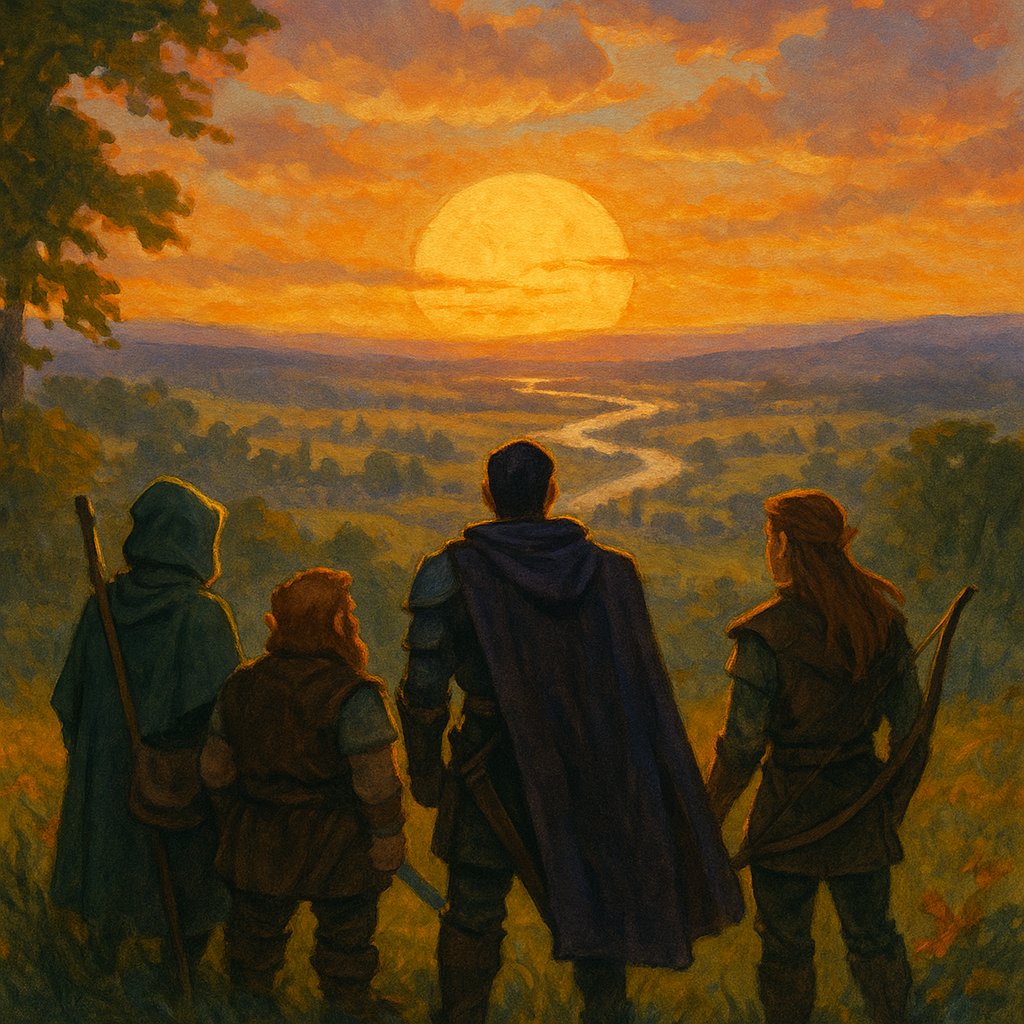
Or did you stand together at the edge of the story, look back at the road you’d walked, and say, “Yeah. That’s where this belongs”?
You don’t have to craft perfect finales. You don’t have to design flawless epilogues or Oscar-worthy monologues. You just have to treat the end with the same care and intention you give to the beginning.
Call your shot. Build a landing strip. Give your characters one last chance to breathe.
Then let them go where all good characters go: not into oblivion, but into the small, permanent corner of your life labeled, “Stories that mattered.”
Let me know how your campaigns have ended in the comments section below!
Until next time, Dear Readers...