The Long Rest Paradox: Why Downtime Should Matter More
An Alternative to Handwaiving Rests...
Dear Readers,
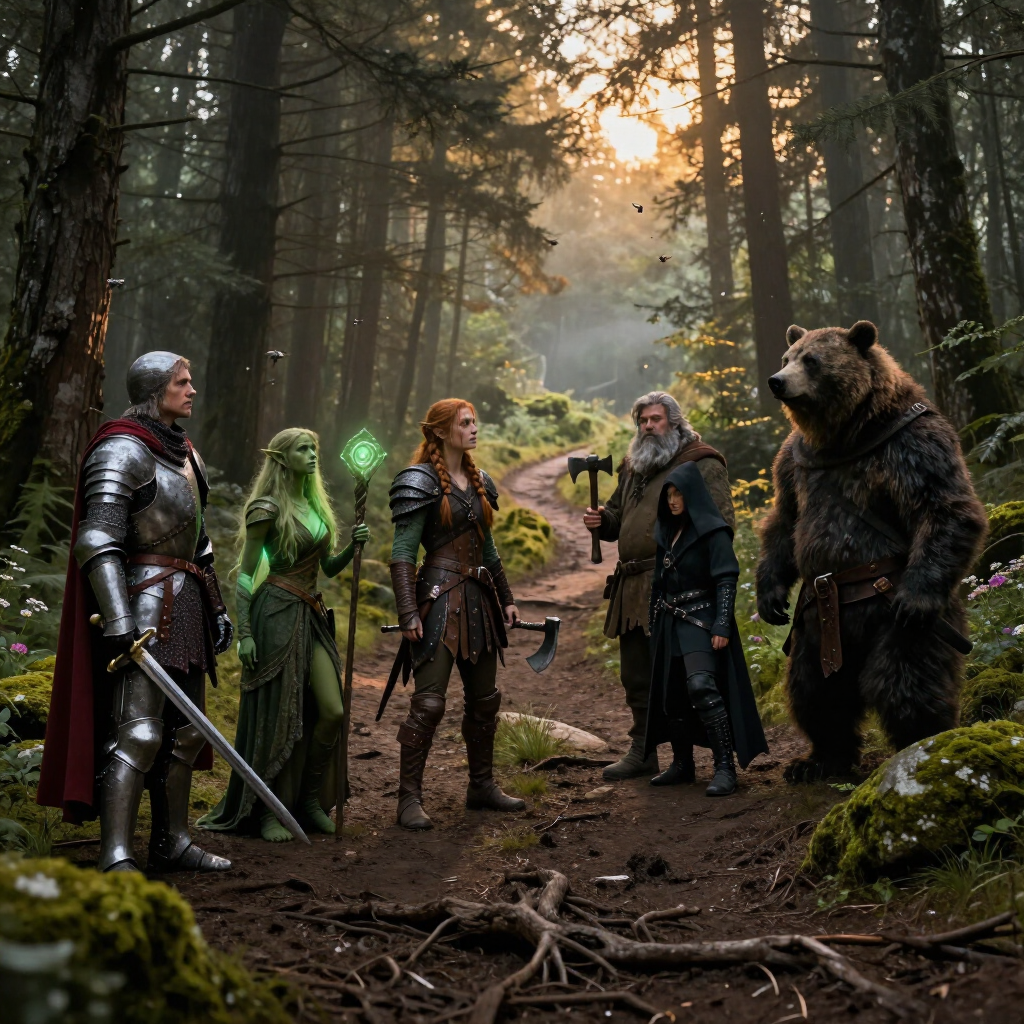
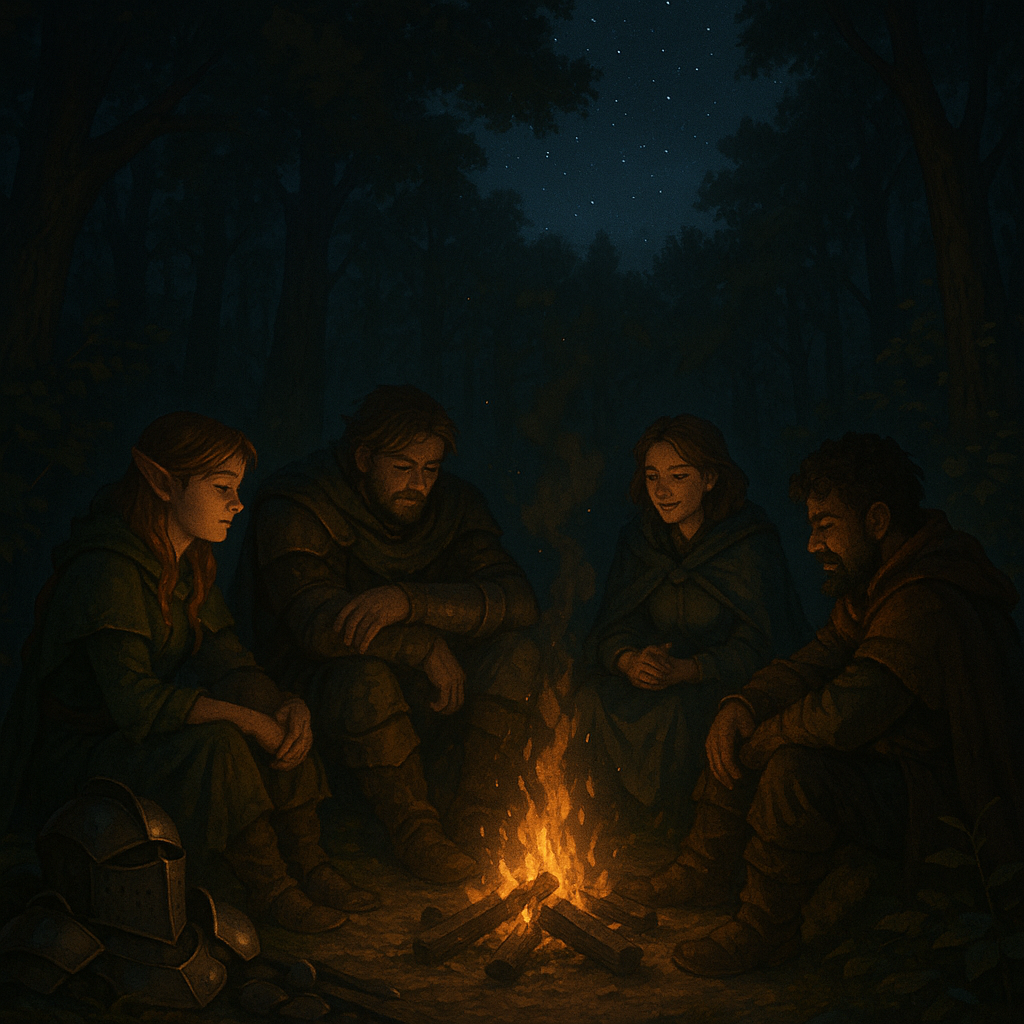
Picture your party huddled around a small campfire after the chaos of battle. The fighter sharpens their blade. The cleric stares quietly at the flames, still hearing the screams of the dying. The rogue slips away from the circle to clean blood from their dagger, while the wizard sketches a circle of runes in the dirt, muttering half-remembered spells.
No one rolls dice. No one makes attack actions. Yet something real happens here.
This is the space between heroics — the quiet after thunder. It is the part of the story where characters become people.
Downtime, rest, and recovery are often treated as mechanical necessities in Dungeons & Dragons. Players see them as a reset button, a place to count hit points, regain spell slots, and move on. Yet if you linger in that silence for just a moment, you’ll find something sacred hiding there: the heartbeat of storytelling.
Today we’ll talk about what I call the Long Rest Paradox: the idea that the times when nothing seems to happen are often when everything important does.
The Speed of Modern Storytelling
We live in a culture that races toward action. Movies skip to explosions, novels skip to conflict, and campaigns skip to combat. Players crave progress. DMs crave pacing. Somewhere along the way, we forgot how to rest.
In older tales, heroes wandered for years. They stopped to heal, to mourn, to dream. The audience grew with them because time passed with them. D&D, by contrast, often compresses everything into a whirlwind of six-second intervals and “short rests” that last an hour of silence no one roleplays.
It’s not wrong to move fast. Action keeps the table excited. But just as a symphony needs its pauses, a campaign needs its quiet. When the players rest, they give the world room to breathe.
That breathing space lets stories grow roots.
What a Long Rest Really Means
A long rest is not simply eight hours of sleep. It’s eight hours of being alive. It’s the weight of exhaustion settling into armor straps, the smell of rain, the sound of someone whispering in their dreams.
The act of resting is an act of vulnerability. The heroes remove their weapons, unlace their boots, and trust that the night will not devour them. In that trust lies potential — for reflection, for confession, for transformation.
Imagine describing a long rest like this:
“The fire burns low. The stars seem colder tonight. The cleric’s holy symbol glints once in the embers before disappearing into shadow. You can all still smell the blood.”
Suddenly, what could have been a skipped scene becomes emotional theater.
The Narrative Breathing Space
Downtime is more than recovery. It is pacing. Every high moment needs a low one. Every loud battle needs a whisper afterward.
When you cut directly from battle to the next quest hook, you rob the players of closure. You remove the feeling of aftermath. That small silence after chaos lets them process who they’ve become since the last fight.
Have you ever noticed that players talk differently after combat? Their jokes turn darker, their laughter quieter, their posture a little tenser. The game teaches them the weight of survival without needing a single rule to do so. As a Dungeon Master, all you have to do is stop moving the camera for a moment and let the characters fill the silence themselves.
Campfire Conversations as Character Arcs
Some of the most important moments in a campaign happen when the party is simply talking. Not interrogating an NPC. Not solving a riddle. Just talking.
A campfire scene can show more character growth than ten levels of combat. It is where people confess fear, reveal love, or admit regret. You can frame these moments subtly — a player noticing someone staring too long into the flames, or a sudden question breaking the silence.
Try asking open prompts at the table during rest:
- “Who can’t sleep tonight, and why?”
- “What do you dream about?”
- “What smell from the fire reminds you of home?”
Let answers flow naturally. You’ll be surprised how often laughter turns to sincerity, and how often silence feels like truth.
Worldbuilding Through Stillness
Downtime is also where your world can speak for itself.
When the heroes rest, describe the sounds of distant crickets, the shimmer of will-o’-wisps across the swamp, or the faint chanting from a faraway temple. The world continues to move, even when the heroes are still.
That movement creates immersion. Players feel like they inhabit a living place instead of a stage that freezes between acts.
You can use these quiet details to seed foreshadowing. A chill wind hints at an approaching undead army. The smell of burning wood suggests villages destroyed ahead. The small noises of the night keep the story breathing while the dice remain untouched.
The Mechanics of Meaningful Downtime
If you want rest to matter, give players something to do during it beyond counting resources. Let them choose small actions that reveal who they are.
Some examples:
- The fighter polishes their weapon, remembering the person it once belonged to.
- The rogue carves small figurines from wood as a nervous habit.
- The wizard spends the evening sketching constellations, mapping their course by the stars.
- The cleric prays not for victory but for forgiveness.
You can ask for small rolls, Performance, Religion, History, but not for success or failure. These are not mechanical actions; they’re emotional ones. The rolls simply give texture. A low roll might mean distraction, a high roll might reveal inspiration. Either result tells a story.
Training and Personal Growth
In older editions of D&D, training between adventures was mandatory for leveling up. That requirement has disappeared, but the idea remains powerful.
Downtime can be when characters practice sword forms, study languages, or attempt to mend relationships. Use it to highlight change. A barbarian might learn restraint from meditation. A bard might compose a song that becomes a recurring motif.
These activities rarely need dice. They need honesty. Ask players, “What are you working toward when the world stops trying to kill you?” That single question can reveal more about their motivations than any backstory paragraph.
Dreams as Storytelling Tools
Dreams are a perfect way to make rest feel magical and personal. They can foreshadow danger, reveal hidden fears, or show glimpses of divine influence.
If you use dreams, make them poetic rather than literal. Let imagery do the talking.
“You stand in a field of broken swords. Every blade hums your name. In the distance, a single tree grows upside down.”
Players will discuss these dreams for days, and you can reveal their meaning later or never at all. Mystery gives rest weight.
Cultural Approaches to Rest
Different cultures in your world should rest differently. This variation makes downtime feel grounded in worldbuilding.
- Elves might meditate in trance rather than sleep, their dreams lucid and shared through song.
- Dwarves might rest in communal halls, telling stories before dozing off mid-sentence.
- Nomadic tribes might take turns keeping a sacred lantern burning through the night.
- Undead or warforged might pretend to sleep just to feel normal around living companions.
Let players learn about each other through how they handle stillness. Rest becomes anthropology.
The Emotional Aftermath of Battle
Downtime is often where characters cope with trauma.
After a brutal fight, describe the world as quieter than usual. Let the silence linger. If a character lost a friend, give them a moment alone. If they survived against impossible odds, let the adrenaline fade into exhaustion.
Encourage players to describe their reactions. One might vomit. Another might go completely still. Someone might try to joke but fail halfway through. These moments give combat emotional consequence.
If your players are hesitant to open up, lead by example. Describe a non-player character doing something small but telling, like polishing a dented shield with shaking hands. Humanity invites humanity.
The Long Rest as Reflection
Rest is also a time for the characters to process their beliefs. What have they learned? What have they lost?
A paladin might question the justice of their god after seeing an innocent suffer. A wizard might wonder if their pursuit of knowledge causes more harm than good. These quiet reflections create depth that no treasure hoard can equal.
Encourage players to keep journals in character. Let them write letters to family or future selves. These fragments can become artifacts within the story, discovered by later adventurers or quoted during epilogues.
The World Moves Without Them
One of the most powerful uses of downtime is to remind players that the world does not wait.
While they rest, enemies regroup. The weather shifts. News travels. Someone else makes a move. When the party wakes, things are slightly different.
This creates tension without combat. The rest feels real because it has a cost. Heroes cannot always be everywhere at once, and that truth makes them human.
The Role of Humor and Humanity
Rest is not only for sorrow. It can also be joyous. Some of the best laughter at the table comes from small, silly campfire scenes. Maybe the ranger burns dinner again. Maybe the barbarian snores so loudly that birds scatter.
Laughter bonds the party just as much as tragedy. Those jokes will echo later in serious moments, reminding players of why they fight together. A well-timed laugh can heal more than magic ever will.
Downtime as Foreshadowing
You can use quiet scenes to plant seeds for future storylines.
While resting in a tavern, the party might overhear a bard singing about a mysterious relic they will encounter later. During a long journey, a character might dream of a storm that mirrors a coming battle.
Because rest feels safe, players let their guard down. When you place hints there, they feel organic rather than forced. The calm makes the eventual storm more dramatic.
The Rest as Reward
We talk a lot about rewarding players with gold and power, but rest itself can be a reward.
After a long dungeon crawl, describe what real safety feels like. Let them find an inn with hot baths and soft beds. Give them the sensory reward of survival.
The water is clean and warm. The sheets smell of lavender. For the first time in weeks, you sleep without dreams.”
That peace will feel more valuable than treasure.
Interludes and Epilogues
Consider using downtime as natural story transitions. Between major arcs, give your players a session of pure interlude. No quests, no rolls, just the world breathing with them.
They can visit family, write letters, or simply watch the sunset. These sessions recharge both players and characters. They also give you, as the Dungeon Master, a chance to reset the tone for what comes next.
The Cost of Ignoring Rest
If the group never stops to reflect, their victories begin to feel hollow. Every session becomes a treadmill of danger with no soul.
Without rest, there is no contrast to action. Without contrast, there is no meaning.
The next time your players rush to skip a rest, ask them, “What are you running from?” The answer might reveal something profound.
Shared Silence
Silence at the table can be powerful if used intentionally. Not awkward silence, but shared quiet.
When a scene ends with heavy emotion, do not rush to the next roll. Let the players sit in it. Let them feel the sound of the dice not rolling. That small pause is where immersion thrives.
You will be amazed how a few seconds of real silence can feel like an eternity of truth.
The Long Rest as Cultural Mirror
How a society rests reveals its soul. A city that never sleeps values progress over peace. A monastery that spends every evening in meditation shows devotion. A war camp that sings before dawn speaks of defiance.
You can use rest rituals to teach players about your world. A civilization that has survived centuries of war might treat the act of sleeping as sacred, lighting candles to honor those who never woke.
Let the players witness or participate in such rituals. They will understand the culture more deeply than through exposition alone.
The Illusion of Time
In most campaigns, time only matters during combat. Yet rest can stretch or compress it. When you linger in downtime, the sense of passing days becomes tangible. Characters age, seasons change, and the world feels wide.
Describe small signs of time’s passage:
- Leaves turning color as they camp in the same forest twice.
- A scar fading between chapters.
- A song growing slower each time it is sung.
These simple cues make the campaign feel like a journey instead of a sequence of encounters.
Group Bonds Through Ritual
Encourage your players to create shared rituals around rest. Maybe they always light three torches in memory of the fallen. Maybe they take turns telling a lie and a truth each night.
Rituals create identity. When one night the ritual cannot happen, everyone feels the absence. That absence becomes story.
The Philosophy of Rest
Philosophically, rest is rebellion. It says that even in a world of chaos, there is space for peace. It acknowledges mortality and the need to heal.
Heroes who never rest become monsters driven only by motion. Rest humanizes them. It reminds the table that saving the world is supposed to serve life, not consume it.
Downtime for the Dungeon Master
Rest is not just for characters. It’s for you too.
As a DM, downtime gives you space to adjust pacing, review player choices, and plant future threads. You can introduce small world events that occur while the heroes sleep or travel. You can breathe.
Use these moments to read the table’s energy. Are players tired? Do they need levity? Downtime gives you the emotional thermometer of your campaign.
Endings That Rest
The conclusion of a story deserves rest as much as its middle. When the final battle ends, don’t stop there. Give the heroes time to heal, to say goodbye, to sit by one last fire.
Epilogues are the final long rest — the one that tells players what their efforts meant.
Maybe the ranger returns home and plants the seed of a tree that will outlive them. Maybe the wizard finally sleeps without fear. Maybe the party simply sits together, listening to the wind, knowing the world is safe for one more night.
Sample Scene: The Night After Victory
Here is a way to frame a final rest.
“The war is over. The moon hangs low, and the battlefield smells of rain. You make camp among broken banners. The fire crackles, and no one speaks for a long time.
Then, one by one, you laugh — tired, unsteady, human. The stars listen, patient as ever.”
Moments like this turn dice into memory.
The Paradox Resolved
The Long Rest Paradox is simple: the less that happens, the more that matters.
Combat tells us who characters are under pressure. Rest tells us who they are when no one is watching. Both are necessary. Without quiet, noise loses meaning.
When your players learn to value the pauses, they become storytellers alongside you. They begin to treat every breath, every dream, every shared silence as part of the adventure.
Final Thoughts
In the rush to roll initiative, don’t forget that life in your worlds exists between the clashes of steel. Give your heroes time to sleep, to heal, and to think. Give your players time to feel.
Because sometimes, the most important part of the story is not the dragon they slay, but the fire they build afterward.
Until next time, Dear Readers…